March 19, 2014

The Camping Trip That Changed America

The Camping Trip That Changed America
Author: Barb Rosenstock
Illustrator: Mordicai Gerstein
Publishing Company: Dial Books
Copyright Date: 2012
34 pages
Nonfiction


                I originally picked up this book just solely based off of the title and cover. As I started reading I was absolutely amazed by the content. The illustrations are beautiful and because I was not previously familiar with this story, I was able to learn all about The Camping Trip That Changed America. The book starts out by introducing Theodore Roosevelt and John Muir, they both “shared a love of the outdoors. They both loved a good story, too. And that was enough to change America.” After Roosevelt read one of Muir’s books asking for help from the government to save the vanishing forests, he asked Muir to take him on one of his trips out west to explore the trees himself, and Muir did as the president asked. On their trip Muir showed Roosevelt giant sequoias in the Mariposa Grove, Glacier point, and Yosemite Valley. At the end of his trip, Roosevelt knew what he had seen had to be protected, but how?
                Reading this book, I was absolutely mesmerized by the illustrations. These illustrations made this story come to life. As a future teacher I know that this book will be one of the first I buy to put on my shelves. Gerstein brings Roosevelt and Muir’s trip to life through what seems to be a combination of paint and ink pen. I have never seen illustrations so beautifully done as these are. The majority are double spread and Muir uses the pages as his canvas to bring these landmarks to life. The text is located at the top and bottom of the page for the majority of the book. Overall, Gerstein’s work made this book for me. The story is absolutely wonderful as well, but the illustrations have me reading the book over and over again.
                As previously mentioned, I already plan to have this book in my future classroom. While reading, I not only just enjoyed the story, but I was able to connect this book for use in the classroom as well. Ideally, this book would be used with lower and upper grades. I feel that second through sixth grade would understand the content the best. The first way I would like to use this book within my classroom would be in a compare and contrasting unit. I would have my students compare Roosevelt with Muir. The second way I could see this book being used within the classroom would be within a science unit on land formations. This book not only describes the men’s trip throughout several different areas, but the illustrations accompany this information nicely. Yet another way I saw that this book could be used within an elementary classroom would be when learning about national parks. This book would be excellent to accompany a science lesson of this sort.

Fire-Breathers' Science Fair

Fire-Breathers’ Science Fair
Author: Tina Gagliardi
Illustrator: Patrick Girouard
Publishing Company: Magic Wagon
Copyright
36 pages
Fantasy

                This book was introduced to me through my school librarian. This book tells about Carly, a dragon who attends Fire-Breathers’ Academy and her imaginary human friend, Gretchen. Carly thought Gretchen was the best imaginary friend anyone could have and they always had fun when they played together. While at school, Carly’s teacher had an announcement about an upcoming science fair. Carly and Gretchen could not wait to get started, but as they did, they realized creating a project for the science fair might be harder than they had originally thought. Will these two friends think of a project to make for the fair? Will they get it made in time? You’ll find all of these answers and more by reading Fire-Breathers’ Science Fair by Tina Gagliardi.
               Overall I really enjoyed the illustrations throughout this book. Girouard does a wonderful job of making this fantasy come to life. This is done through mixed media. These illustrations are double spread which creates a larger than life feeling for these characters. The text is framed on one side of the illustration with no background. All of these aspects really bring this book to life.
                While reading this book, I saw several different ways it could be incorporated into the classroom. One of the first ways I saw a possible use for this book within the classroom was a writing connection. Carly was very different from her classmates because she was the only one who had an imaginary friend. Carly did not spend her time like most of her classmates, “hiding treasure or fighting knights. Instead she often played with Gretchen…” The ending of this book proves that for Carly being different was not a bad thing. Therefore I would have my students write about a way they are different from their classmates and explain why this makes them unique. The second way I would incorporate this into the classroom would be as an introduction to an upcoming science fair and/or science project. And the third and final way I would use this book in my classroom would be to have students create their own science projects much like Carly did. 

Diary of a Worm


Diary of a Worm
Author: Doreen Cronin
Illustrator: Harry Bliss
Publishing Company: Joanna Cotler Books
Copyright Date: 2003
48 pages
Fantasy 


                I discovered this book through my school’s librarian. She suggested this book after I asked if she knew of any good books to use for some of my classroom assignments. Having great faith in our school librarian, I knew this would be a great book as she handed it to me, but as I started reading I enjoyed this book even more than I had originally expected. As the titled suggests, this book is a diary of a worm. Throughout his diary, he narrates the daily adventures he experiences. Although he is a worm, these entries follow the same format of what we would expect from most school aged children. These range anywhere from him telling his sister “no matter how much time she spends looking in the mirror, her face will always look just like her rear end” and the trouble he got in for saying such things to daily events with his friend, spider. Overall, I found this book to be very unique and humorous.
                The illustrations within this book really add to the overall text. They give students an inside look into the worm’s everyday life. These brightly colored illustrations seem to be completed with watercolors. These illustrations vary between double spread and single spread depending on the length of the journal entry. The text is placed at the top of every left page with the date, as how most diaries are laid out. An additional element that I really enjoyed was the front and the back pages of the book. These pages included images that appeared to be taped into the journal. I thought this element was really fun and added additional interest within the book. Overall, I really enjoyed the illustrations throughout the book. I feel that Bliss did a wonderful job with the illustrations in this book.
While this book is not your usual children’s literature piece, I would definitely use this book within my classroom. I think that both lower and upper grades would enjoy this book, but I would ideally use this from kindergarten through second grade. I feel that this book has many different aspects that could be utilized within classroom instruction. The first way I saw that this book could be used within the classroom is to read this book while teaching point of view. The worm’s journal is written much like an elementary age school child, but as you may expect, he does not see things the same way a human would. Therefore, I would have my students read his journal entry and then write the entry from the point of view of a child their age. The second way I saw that this book could be used within the classroom was with introduction of journals. I feel that this is a very creative way to get students interested in writing about their day within their daily journals. The third and final way I would use this book within my classroom would be within a science lesson. While this story is fantasy, it does embed several facts about worms. This book would be great as an introductory element to a more informational text that may be used within the science lesson. I feel that Diary of a Worm would be much more interesting for students to read than most informational texts. 

February 26, 2014

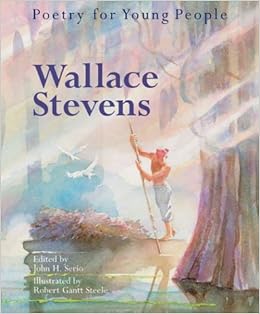
Wallace Stevens

Wallace Stevens
Edited by John N. Serio
Illustrator: Robert Gantt Steele
Publishing Company: Sterling Publishing Co.
Copyright Date: 2004
52 pages
                                      Poetry Collection                                     

          I originally checked this book out just solely based on the few pages I saw while flipping through in the library. Based on this I had the assumption that this book was a collection of poems from different authors. When I actually sat down to read through it, I realized that it was instead a collection of poems by Wallace Stevens as indicated by the title. Due to the misconception I had of this book, I was even more interested in reading it. Each of Wallace Stevens poems in this collection vary in style. But most all of his works had one thing in common, nature. The introductory section in this book explains that this has always been a very large part of Wallace Stevens’ life, and this is seen throughout his work.
Steele’s illustrations throughout the book are done with watercolor. The placement of the illustrations are based on the length of each poem. The majority of these illustrations covered a single page and very few double spread illustrations were seen throughout this collection. I felt that the illustrations played a huge role in bringing meaning to his poems. The text is set up as most all poetry collections are. Each poem starts its own page as each poem in this book tells its own story. The majority of the poems were only one page, and very few covered two.
One aspect I really liked about this collection of poems is that an interpretation of each poem was included at the top of each page. I think this is an excellent way for children to read and understand poetry. Therefore this is one of the first ways I would incorporate this book into my classroom. Ideally I would have students first read a poem from this collection on their own and create an interpretation of what they think the author was trying to express in his writing. After they have written their own interpretations, I would have the students read what interpretations were included in the book. They would then share aloud the similarities and differences between these interpretations. The second way I would incorporate this book into my classroom would be within a poetry unit. This book has a wide variety of poems and I feel that my students would benefit from these different examples in their instruction. The third way I would use this book in my classroom would be in a senses unit. Steele’s poetry is absolutely full of different examples the students could find. I feel that they would love to make this connection to text. As you can see, this book is full of great teaching opportunities. I would definitely use this book in my classroom.  


February 25, 2014

Mrs. Brown on Exhibit


Mrs. Brown on Exhibit: and Other Museum Poems
Author: Susan Katz
Illustrator: R.W. Alley
Publishing Company: Simon & Schuster Books for Young Readers
Copyright Date: 2002
36 pages
Poetry Collection


          I was originally drawn to this book because it is unlike most other poetry collections I discovered. I found that most poetry books were not all that interesting for me to read, much less for children. Even though I know that this is most likely just due to the stigma poetry has, I believe poetry can be fun if done the right way.  Mrs. Brown on Exhibit is definitely the way to do this. This book is a fun-filled adventure through every possible exhibit imaginable at a museum. Mrs. Brown loves museums and her students love nothing more than to explore these museums with her. Throughout this book her students discover everything from insects to mummies. I would definitely recommend this book to anyone who asks.
The illustrations in this book are beautifully done with watercolor. R.W. Alley’s work brings these different exhibits to life. The illustrations are both double-spread and on a single page. The text in this book is unique to its genre. As seen in most poetry collections, the poems stand on their own as each tells its own story. Therefore, there’s only one poem on most of the pages, while some of the smaller poems contain two to a page. But even with that said, throughout the majority of the book, there is  about as much text on a page as you would expect to see in a picture book of the same level.
I previously mentioned I really enjoyed this book. Therefore I would definitely use this book in my classroom. One of the first ways I saw an opportunity for using this book would be through an in-class field trip. Not many elementary classrooms I know of are able to attend field trips to museums. Therefore I feel like this would be a great way to bring the museum to my students. The second way I thought this book could be incorporated into the classroom would be through each section's topic as an introductory reading to a lesson. For example, the “Giant Heart” section introduces many great aspects of the heart that could be easily expanded upon in a science lesson on the topic. The third and final way I think I would use this book in my classroom would be in a poetry unit. This book includes many different fun poems that I think would get students interested in poetry. With use of any of these ways, I feel that this would be a great book to use in any classroom. 

Collection of African American Poetry


African American Poetry
Edited by Arnold Rampersad and Marcellus Blount
Illustrator: Karen Barbour
Publishing Company: Sterling Children's Books
Copyright Date: 2012
52 pages
Poetry Collection


As discussed in the introductory section of this book, African American poetry was very rarely seen during the 1700's to the 1800's. This was largely due to the obstacles  and misconceptions slavery produced for these writers. Even later on into the 1900's, many Americans would not read the works of African American poets due to their race. African American writers continued to pave the way over the years to free any and all restrictions they faced. This collection contains a great variety of poetry from many different African American authors that captures the struggles faced by this culture over the years.
The majority of the poems seen within this collection are short and each poem only covers one page. At the top of the page is a short description of the author’s life and literary history. Most all of the illustrations are single page due to this layout. The artwork does a wonderful job at depicting each individual poem while still looking similar throughout. The illustrations for this book were created using watercolor, ink, and collage.
Being that we are currently celebrating Black History month, I think this would be an ideal way to incorporate this book into my classroom. This poetry collection not only includes a very lengthy, descriptive section on the history of African American literature, but I also enjoy that each piece is by a different African American author. I feel that students will gain a vast new knowledge of some of the author’s experiences through this collection works. The second way I saw that this book could be used in a classroom was in a poetry unit. This book contains many different types of poems, and therefore students would be exposed to most all types of poetry in this single book. The third way I would personally use this collection of poetry would be for the students to further research an author within this book and give the class a reflection of what they have discovered. Since I would plan to use this book in an older classroom, I feel that students could really enjoy this. I think that they would gain great insight on these author’s lives through further research on an African American author. Overall, I feel that this is a very informative book and I would use it in my classroom.